


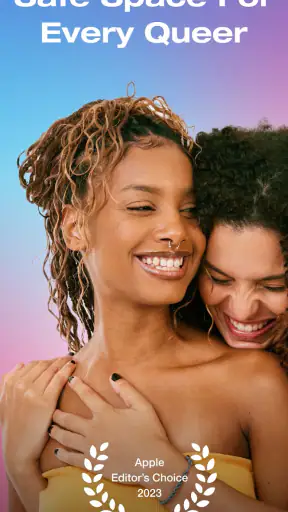
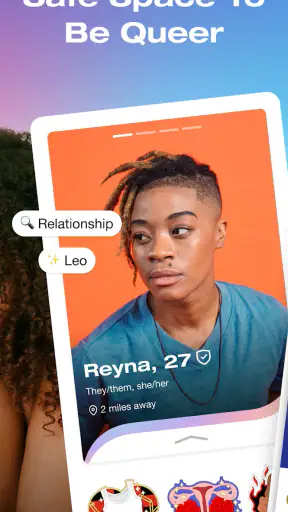
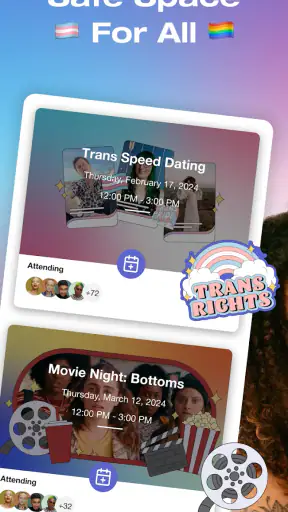
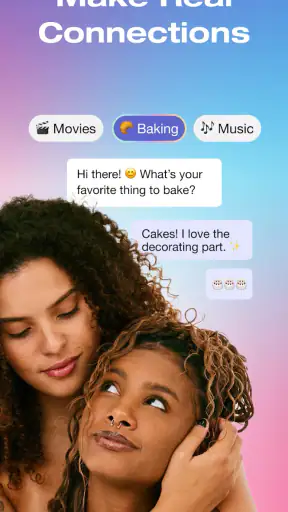
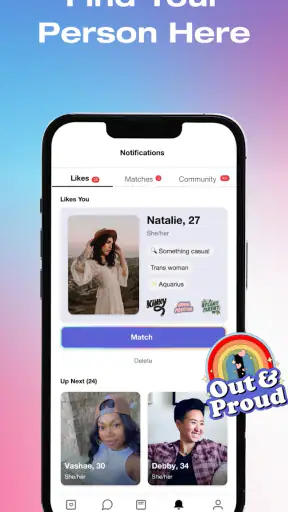
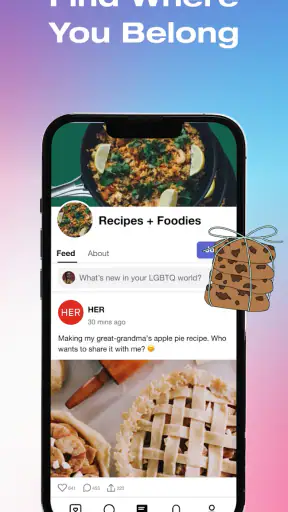
I found HER most useful when I treated it as a personal social space rather than something to leave open on a shared phone. That distinction matters. This is a dating and community app aimed at gay, bisexual, non-binary, trans and queer women, so the value comes from meeting people who understand that audience, not from trying to make it work like a general-purpose household messaging tool.
In my experience, the app makes the most sense for someone who wants dating alongside a broader queer social environment. It is free to install, with optional purchases ranging from $0.99 to $179.99 per item, and it carries a Mature 17+ age rating. The developer is HER App, and the Android release requires OS 9 or later. Those details are worth checking before installing, especially if an older phone is involved or if the device is used by more than one person.
How HER fits into real life, privacy and shared-device routines
A realistic shared-use situation
Imagine a home where two adults share a tablet, or where one person occasionally lends a phone to a partner, roommate or family member. A dating app can become awkward very quickly in that setting. Even without opening a conversation, visible notifications, profile previews or an app icon can reveal more than the account holder intended. I would not treat HER as a communal app in the way people might treat a streaming service, a recipe app or a shared calendar.
My practical approach would be simple: use it on a personal device whenever possible, keep the account tied to one person, and avoid leaving the app open when handing the device to someone else. This is not a criticism of the service so much as a basic boundary for any dating platform. The audience is specific, and the conversations may be personal, so accidental exposure can feel more serious than an ordinary social notification.
There is also a social reason to keep the account separate. A profile represents one person’s identity, preferences and availability. Sharing it, even casually, could create confusion for matches and make conversations feel misleading. If several people in a household are interested in using the service, each person should have their own account and their own device habits rather than trying to coordinate through one login.
Setting boundaries before creating a profile
The first useful decision is not which photo to choose; it is deciding how visible you want your dating activity to be around other people. I would review notification behavior at the phone level, consider whether message previews should appear on the lock screen, and avoid signing in on a device that is routinely unlocked by others. These are small steps, but they make a meaningful difference in a shared environment.
I would also choose profile material with context in mind. A photograph that feels harmless among friends may identify a workplace, neighborhood or regular routine to someone outside that circle. That does not mean hiding your personality. It means checking backgrounds, visible badges, house numbers and other clues before publishing. A strong profile can still be warm and specific without disclosing every detail of daily life.
Another boundary concerns conversations. I found it more sensible to move slowly when someone immediately asks for highly personal information, financial help or a fast switch to another service. HER can help people discover compatible connections, but the quality of a match cannot be proven by a profile alone. I would keep early messages inside the app until the person seems consistent and trustworthy, and I would never treat a friendly tone as proof of identity.
Coordinating dating with household life
For someone living with a partner, relatives or roommates, using a dating app can require clearer communication than simply installing it. If the account holder is single, the main issue may be privacy. If the household includes a partner or shared finances, the issue can also be expectations and consent. I would make sure the people directly affected understand how the app fits into the relationship, rather than allowing its presence to become a source of suspicion.
The app itself should not be used as a substitute for household coordination. It is not the place to organize chores, share errands or manage a family schedule. If a date affects a shared car, childcare arrangement or evening plan, I would communicate that separately through the household’s normal channel. Keeping dating conversations and practical coordination apart reduces misunderstandings and avoids putting private messages in front of people who do not need to see them.
A realistic routine might be checking messages during personal time, then adding only the necessary appointment details to a private calendar. I would avoid forwarding screenshots of conversations into a group chat, even when asking a friend for advice, because other people’s words and identities deserve consideration too. A trusted friend can still help with a profile or first-date plan without receiving an entire message history.
For first meetings, I prefer a public location and a simple plan that does not depend on the other person knowing my home address. I would tell one trusted person where I am going and when I expect to check in. These habits are especially useful when dating through a focused community app, because shared identity or interests can create a feeling of familiarity before real-world trust has developed.
Age, maturity and trust
The Mature 17+ label is important in a household with teenagers. I would not interpret that rating as permission for every person in the home to use the app. A parent or guardian should consider the young person’s age, maturity, local rules and ability to handle dating conversations before allowing access. The platform’s intended audience is adult-oriented, and that deserves a clear boundary rather than casual access from a shared device.
For adults, the same rating is a reminder that conversations may involve relationships, sexuality and identity. That can be valuable for people who want a space centered on queer women and gender-diverse users, but it also means the app may not suit someone looking for a completely general-audience social network. I would explain that difference to anyone in the household who sees the app and assumes it is simply another messaging service.
Trust also needs to be earned in stages. I would pay attention to whether a match respects a stated boundary, answers questions consistently and accepts a slower pace. Pressure to meet immediately, requests for money, evasiveness about basic details or attempts to isolate someone from friends are all reasons to stop engaging. The app can begin a connection; it cannot perform the judgment that keeps a person safe.
What the focused community changes
The strongest reason to choose HER is its focus. General dating apps can offer a larger mix of users, but that often means spending more time filtering for people who understand queer identities, relationships and expectations. Here, the starting point is more relevant to lesbian, bisexual, trans, non-binary and queer women. That focus can make profile browsing and conversation feel less exhausting.
It also creates a trade-off. A narrower community may be more comfortable and culturally familiar, yet the number of suitable local matches can vary significantly by location. Someone in a large, diverse city may find the focused audience especially useful. Someone in a small town may encounter fewer nearby profiles and need patience, a wider search area or a willingness to use the social side of the app rather than relying only on immediate dates.
I would not install it expecting every interaction to become romantic. Some users may be looking for friendship, community or conversation, while others want a date quickly. Being direct in a profile and early messages helps prevent mismatched expectations. That clarity is particularly important when a household schedule is busy: it is easier to plan a relaxed coffee with someone whose intentions are understood than to commit time to an ambiguous connection.
Everyday strengths and points of friction
The app’s social-and-dating blend is useful for people who do not want romance to be the only reason to participate. A person new to a city, newly exploring their identity or simply tired of broad dating platforms may appreciate a setting where the audience is more specific. I see the biggest benefit in reducing the need to explain basic context before a conversation can become personal.
At the same time, a community focus does not remove ordinary dating-app frustrations. Profiles can still be incomplete, conversations can fade and people can present themselves selectively. A focused audience may improve relevance without guaranteeing chemistry, availability or good communication. I would judge the app by the quality of connections I can realistically make, not by how quickly I can collect matches.
The optional purchase range is another point to think about. Since the app is free to install, I would begin with the no-cost experience and decide whether any paid option genuinely solves a problem I have. I would not buy simply because a prompt creates urgency. Anyone sharing a phone, payment method or app-store account should be especially careful, because an in-app purchase can affect a household budget even when the account itself is personal.
The current version is 3.29.23, and the app has accumulated an average rating of 4.3 from around 72 thousand ratings. It has also passed 5 million installs, which suggests that this is an established service rather than a tiny experiment. Those figures give me some confidence that a user can find an active community, but they do not guarantee equally strong activity in every region or for every preference.
When another option may be better
I would choose a general dating app instead if maximum local reach mattered more than a focused queer audience. A broader service may offer more nearby profiles, particularly in an area with a small LGBTQ+ population. The cost is that I might spend more time filtering for people who are compatible with my identity, relationship goals and boundaries.
I would choose a dedicated community platform rather than a dating-first service if my main goal were discussion, activism, events or long-term friendship. HER’s social dimension is helpful, but someone seeking structured group conversation may prefer a tool designed primarily around communities instead of matches and direct connections.
I would also skip it for a child, for a person who cannot keep an account private, or for someone uncomfortable with dating and identity-related conversations appearing on a shared device. The app is a poor fit when household boundaries are unclear. Installing it in that situation could create more tension than value, regardless of how relevant the audience might be.
My household verdict
After using it as a focused queer dating and social app, I see HER as a strong choice for adults who want relevance and community context instead of an entirely general pool. The developer, HER App, has built its identity around a clearly defined audience, and that focus is the reason I would recommend trying it. It is especially appealing to someone who wants dating conversations where lesbian, bisexual, trans, non-binary and queer experiences are not treated as an afterthought.
My recommendation comes with practical conditions: keep the account personal, protect notifications on shared devices, discuss relationship expectations openly, and take time before moving a conversation into more private channels. Those habits are not optional extras in a household setting. They are what allow the app to remain a useful personal space instead of becoming an accidental source of exposure or conflict.
Overall, I would recommend HER to an adult who values a more specific community and is prepared to manage privacy thoughtfully. I would not recommend it as a shared household app, a substitute for family coordination or a shortcut to trust. Used with clear boundaries, it can make queer dating feel more relevant and less like a search through an audience that was never designed with you in mind.


